Every year across Phoenix, Mesa, Chandler, Gilbert, Scottsdale, and surrounding areas, homeowners see the same thing: the summer electric bill spikes. Most assume they simply used more air conditioning — but in Arizona, the spike usually comes from how the home and AC system behave in extreme heat, not just how often it runs.
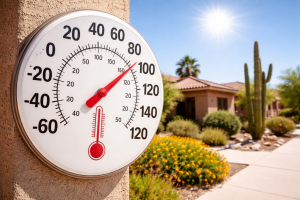
The system runs longer, works harder, and produces less cooling per minute. By late afternoon, many units operate almost continuously just to maintain temperature. At the same time, APS and SRP electricity rates are highest during peak hours, meaning the most expensive power is being used when your house needs cooling the most.
Heat inside the home also increases the workload. Attics in Metro Phoenix commonly reach 140° to 170°. Because ductwork runs through this space, cooled air warms before it reaches rooms, forcing the system to cool the same air repeatedly. If insulation is low or settled, the home reheats quickly and the thermostat calls for cooling again within minutes.
Small air leaks make this worse. Openings around attic hatches, windows, doors, and ducts allow hot air in and conditioned air out, so the system is constantly cooling replacement heat. Over time, aging equipment compounds the problem. After years of desert summers, components wear and efficiency drops, meaning the same comfort costs more electricity each season.
Even thermostat habits matter in Arizona. Lowering the temperature after the home is already hot or turning the system off during the day often increases costs because the AC must perform heavy recovery cooling during expensive peak rate periods.
In short, summer energy bills rise because several conditions happen at once: extreme outdoor heat, superheated attics, peak electric pricing, gradual equipment wear, and small air leaks. When combined, they create the dramatic bill increase many Metro Phoenix homeowners experience every year — even when their daily habits haven’t changed.