Arizona summers put air conditioners through a lot. Whether you live in Phoenix, Scottsdale, Mesa, Chandler, Gilbert, Glendale, Tucson, Casa Grande, Peoria, Tempe, Queen Creek, or Buckeye, your AC system can spend months working against triple-digit temperatures, heavy sun exposure, dust, and long cooling cycles.
Your air conditioner is built to cool your home, but it still has limits. When the outdoor temperature climbs, your system has to work harder to remove heat from inside the home and release it outside. If your system already has a dirty filter, blocked airflow, worn parts, low refrigerant, or neglected maintenance, extreme heat can make those issues worse fast.
That is when your AC may start showing signs that it is being pushed too hard.
Your AC does not simply “make cold air.” It removes heat from inside your home and moves it outdoors. During extreme heat, that process becomes harder because the outdoor unit has to release heat into already-hot air.
Your system may work harder because of:
Longer run times
High outdoor temperatures
Dirty or clogged air filters
Dust buildup on coils or around the outdoor unit
Blocked vents or poor airflow
Low refrigerant or refrigerant leaks
Aging electrical components
Poor insulation or air leaks
Thermostat settings that are too low
Heavy direct sunlight on the home
In areas like Phoenix, Mesa, Chandler, Tucson, and the West Valley, AC systems often run for long stretches during summer afternoons. That does not always mean something is wrong, but if your home is still uncomfortable, your system may need attention.
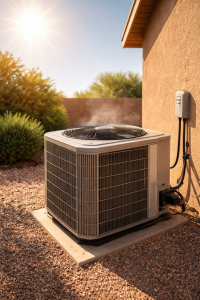
Longer run times are common during extreme heat, but there is a difference between working hard and struggling.
If your AC is running almost nonstop and your home still does not reach the set temperature, the system may be under too much strain. This can increase wear on the compressor, blower motor, fan motor, capacitor, and other key parts.
Over time, constant operation can make small issues become expensive repairs.
Weak airflow is one of the most common signs that your AC is being pushed too hard or that something is restricting the system.
A dirty filter, blocked return, duct issue, blower problem, or dirty coil can all reduce airflow. When airflow drops, your home may cool unevenly. One room may feel comfortable while another feels warm, especially in larger Arizona homes or two-story homes.
If you notice weak airflow in bedrooms, upstairs rooms, bonus rooms, or rooms with large windows, it may be time to schedule an AC repair inspection.
Warm air from the vents is a warning sign. If your thermostat is set correctly but the air coming from the vents feels warm, your system may be dealing with restricted airflow, a refrigerant issue, compressor trouble, dirty coils, or an electrical problem.
Continuing to force the system to run when it is not cooling can create more stress and may lead to a bigger repair.
It sounds strange, but an AC can freeze up during an Arizona summer.
Frozen coils often happen when airflow is restricted or the system has a refrigerant issue. A dirty air filter, blocked return, dirty evaporator coil, or low refrigerant can cause the coil to get too cold and ice over.
Once ice forms, your AC cannot cool properly. If you see ice on the system or notice airflow dropping suddenly, turn the system off and call a professional.
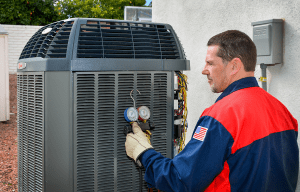
When your AC is pushed too hard, it usually runs longer to do the same job. That can lead to higher energy use and a higher utility bill.
If your energy bill suddenly jumps and your comfort does not improve, the system may be working harder than it should. In Arizona, that can happen quickly during peak summer months, especially if your filter is dirty, your thermostat is set too low, or your outdoor unit is blocked by debris.
Extreme heat puts added stress on electrical components. Capacitors, contactors, fan motors, wiring, and the compressor all have to work harder when the system is running more often.
If your AC has trouble starting, clicks repeatedly, hums, buzzes, or shuts off unexpectedly, do not ignore it. Electrical issues can get worse quickly during extreme heat.
The compressor is one of the most important parts of your AC system. It is also one of the most expensive parts to replace.
When an AC is pushed too hard for too long, especially with poor airflow, low refrigerant, or dirty coils, the compressor can overheat. This is one of the biggest reasons to address warning signs early.
A filter change or tune-up is much easier to deal with than a compressor failure in the middle of an Arizona heat wave.
Your AC may be pushed too hard if you notice:
The system runs constantly
The home does not reach the set temperature
Some rooms are much warmer than others
Airflow feels weak
Warm air comes from the vents
Your energy bill has increased unexpectedly
The outdoor unit makes unusual noises
The system turns on and off frequently
Ice forms on the system
The thermostat is set low, but the home still feels hot
If you live in Phoenix, Tucson, Scottsdale, Mesa, Chandler, Gilbert, Glendale, Peoria, Tempe, Queen Creek, Buckeye, Surprise, Avondale, or Casa Grande, these warning signs are especially important during the hottest months of the year.
A dirty air filter makes it harder for your system to move air. During heavy cooling seasons, check your filter often. If it looks dirty, replace it.
Blocked vents can restrict airflow and create pressure in the system. Keep furniture, curtains, rugs, and storage away from supply and return vents.
Setting your thermostat extremely low will not cool the home faster. It usually just makes the system run longer. Choose a comfortable, realistic temperature and let the system work steadily.
Your outdoor unit needs room to release heat. Clear weeds, leaves, dirt, and debris from around the unit. Avoid stacking items nearby or blocking airflow.
Ceiling fans can help rooms feel cooler, allowing you to stay comfortable without dropping the thermostat as low. Turn fans off when you leave the room since fans cool people, not spaces.
Seasonal AC maintenance can help catch worn parts, airflow issues, dirty coils, and performance problems before extreme heat makes them worse.
If your AC is running constantly, blowing warm air, making unusual noises, freezing up, or struggling to keep your home comfortable, it is time to call Chas Roberts.
Our team serves homeowners across the greater Phoenix area, Tucson, Casa Grande, and surrounding Arizona communities. Whether you need AC repair, emergency AC service, or seasonal maintenance, Chas Roberts can help keep your home comfortable through Arizona’s toughest heat.
Arizona heat can push any AC system hard. When your air conditioner is pushed too far, it may run longer, use more energy, lose cooling power, freeze up, or break down when you need it most.
The best way to protect your comfort is to pay attention to warning signs, change your filter regularly, keep airflow clear, and schedule service before small issues turn into major repairs.
Do not wait for your AC to give out on the hottest day of the year. Schedule your AC service with Chas Roberts today and keep your home comfortable through Arizona heat.