The average water heater lifespan depends on the type, usage, and water quality. In Phoenix, most homeowners can expect their unit to last 8 to 12 years. The intense desert heat and hard water can shorten that timeline. Knowing your water heater’s age and maintenance history helps you plan for repairs or upgrades before it fails unexpectedly.
If your showers suddenly turn cold or the water smells metallic, it may be time to look closer at your system. Rusty water, leaks, and strange noises are all warning signs. Don’t wait until your water heater stops working—address small issues early to save money and stress later.
Repairing your water heater can make sense when the issue is minor. Replacing a valve, anode rod, or heating element often restores performance. If your unit is less than eight years old, a professional from Chas Roberts can help you determine whether a repair is the most cost-effective option.
A water heater replacement becomes necessary when your unit is leaking, corroded, or beyond its expected lifespan. Continuing to repair an old unit can cost more in the long run. Replacing it ensures reliability and improved energy efficiency for your Phoenix home.
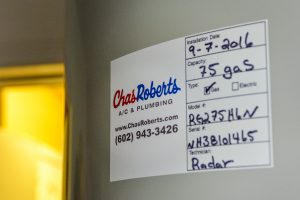
Most water heaters have a manufacturer’s label showing the date of production. If your water heater lifespan has already reached 10 years, you should start planning for replacement. Age-related wear can cause inefficiency and higher energy bills.
Modern water heaters use less energy and provide more consistent temperatures. Upgrading an older system can reduce energy use by up to 20%, according to the Environmental Protection Agency. Over time, this translates into noticeable savings on utility bills.
Tank-style units remain common, but tankless water heaters are gaining popularity in Phoenix. Tankless models heat water on demand, extending your water heater lifespan and saving space. However, they may require higher upfront costs for installation.
The hard water found in Phoenix accelerates mineral buildup inside water heaters. This buildup reduces efficiency and shortens the water heater lifespan. Regular flushing and installing a water softener can minimize damage and help your unit last longer.
Scheduling a timely replacement prevents emergency breakdowns. You’ll avoid cold showers, water damage, and costly last-minute service calls. Plus, a new model adds value and peace of mind.
Replacing an inefficient water heater reduces your household’s carbon footprint. High-efficiency systems use less fuel and generate fewer emissions. If you’re environmentally conscious, consider models that carry the ENERGY STAR certification.
If you notice higher energy bills or water that takes too long to heat, it might be time to upgrade. Newer systems are quieter, safer, and more durable, giving you better performance throughout the year.
Scheduling yearly inspections with licensed professionals helps extend your water heater lifespan. Technicians can identify wear and tear before it causes bigger problems. Regular maintenance is an affordable way to protect your investment.
Flushing your tank every six months removes sediment buildup and improves heating efficiency. Checking the anode rod and temperature settings also prevents corrosion and premature failure.
Modern water heaters often include Wi-Fi connectivity and mobile app control. These features allow you to monitor your water heater lifespan and energy usage from anywhere. Smart integration makes managing your home’s comfort even easier.
While repairs can cost less upfront, frequent service calls add up. A full water heater replacement may provide a better return on investment by reducing ongoing costs and boosting energy efficiency.
Choosing the correct tank size ensures you never run out of hot water. A professional can calculate your home’s needs based on usage and family size. Oversized or undersized systems waste energy and strain the water heater, reducing its lifespan.
Arizona homeowners may qualify for energy-efficient rebates when they install a new water heater. Visit the ENERGY STAR rebate page for more information about available programs and savings opportunities.
Proper installation plays a major role in your water heater’s performance and lifespan. Always choose a licensed, experienced technician. The team at Chas Roberts provides expert installation and trusted service throughout the Phoenix area.
As your family grows or your water usage changes, your water heating needs evolve. Planning a water heater replacement before failure keeps your home running efficiently. Proactive upgrades also help you take advantage of new technologies and energy savings.
Stay updated with our latest home maintenance tips and guides by visiting our blog regularly.
Your home is your haven, and we’re here to help you keep it running smoothly.
Read our customer testimonials and check out our newest deals and coupons to discover why Chas Roberts is the right fit for you!